Why Referral Networking Still Works: The Sociology of Trust for Local Businesses
Nathaniel Kober · · 8 min read
Part of our Business Growth & Consulting work.
In an age of algorithms and AI answers, a group of business owners meeting over eggs every week still sends each other a remarkable amount of work. Sociology explains why: weak ties, borrowed trust and social capital. Here's how referral networking works, where it falls short, and how to make it pay off.

Article
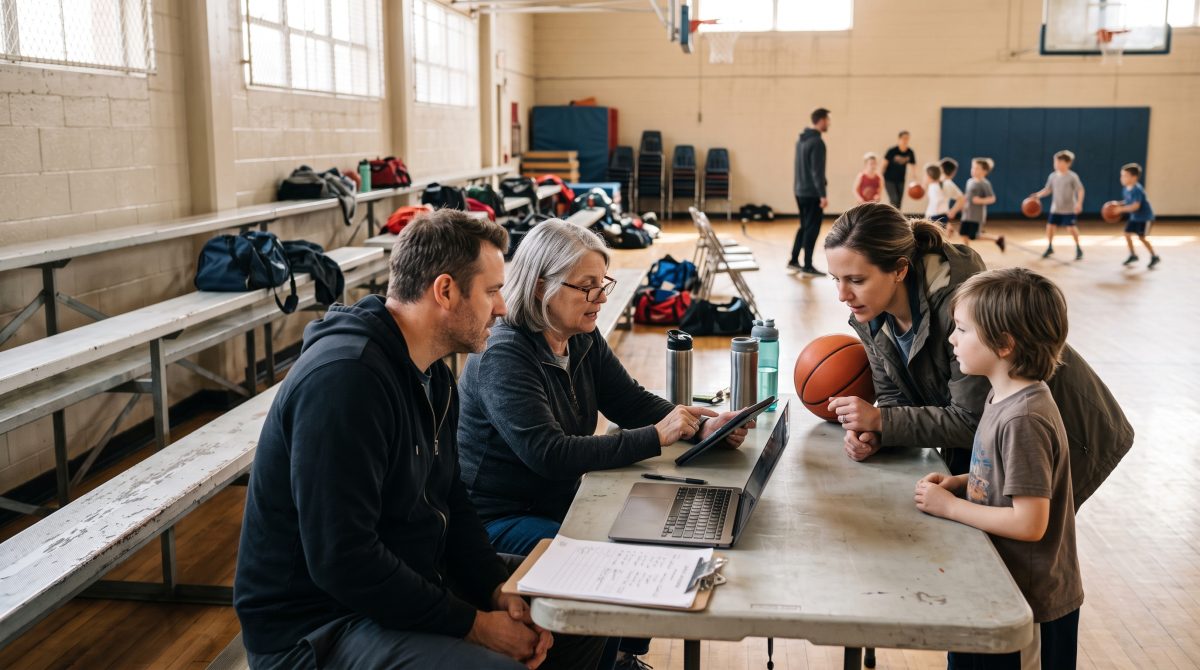
Every week, in diners and community rooms across the country, small groups of business owners meet before the workday starts. A plumber, a realtor, an insurance agent, a roofer, an accountant, a web designer. They eat breakfast, each stands up for a minute, and then they pass each other names of people who need help.
In a world of search algorithms, targeted ads and AI assistants that recommend businesses in seconds, it looks almost old-fashioned. And yet it keeps working.
The short answer: referral networking works because it runs on trust that's already been earned. A recommendation from someone you know carries more weight than any ad, and a structured group turns a room of acquaintances into people who know each other's work well enough to vouch for it. Sociologists have names for what's happening: the strength of weak ties, social capital and reputation as collateral. Understanding those ideas is the difference between a networking group that fills your calendar with breakfasts and one that fills it with work.
People trust people more than ads
In Nielsen's 2021 Trust in Advertising study, 89% of respondents said they trust recommendations from people they know, which made it the most trusted source of information about products and services in the study.
That isn't a new finding, and it isn't going away. Even as more people ask AI tools who to call, as we explain in how to show up in AI answers, a personal recommendation answers a question no algorithm can: would someone I trust send me to this person?
The strength of weak ties
In 1973, sociologist Mark Granovetter published one of the most cited papers in the field, "The Strength of Weak Ties." His insight was counterintuitive. When people found new jobs, the useful information often didn't come from close friends and family. It came from acquaintances.
The reason is structural. Your close friends mostly know the same people you do and hear about the same opportunities. Your acquaintances move in different circles. They're the bridges to information you'd never hear otherwise.
Fifty years later, the idea got a large real-world test. In a study published in Science in 2022, researchers analyzed experiments on LinkedIn involving more than 20 million people over five years. They found that moderately weak ties, people you know but aren't close to, were the most helpful for job mobility. Very weak ties helped less, and so did very strong ones.
A referral group is, in effect, a machine for building exactly that kind of tie. The people around the table aren't your family or best friends. They're moderately weak ties, each one connected to a different set of customers, neighbors and colleagues.
Borrowed trust: a referral is a loan of reputation
When a plumber tells a homeowner, "Call this roofer, he did my mother's house," the plumber is doing more than passing along a phone number. He's lending his own reputation. If the roofer does poor work, the homeowner will think less of the plumber too.
Sociologists describe the trust and goodwill built up inside relationships as social capital. Like financial capital, it can be built, spent and lost. A referral spends some of it. That's exactly why referrals are powerful, and why people are careful about who they refer.
It also explains why referrals tend to convert better than cold leads. The customer arrives already halfway convinced, because someone they trust has taken a small risk on your behalf.

Why structured groups work better than random networking
Most people's experience of "networking" is a mixer: a room full of strangers, a stack of business cards and very little that happens afterward. Structured referral groups are designed around the sociology above.
One member per profession. LeTip International, founded in San Diego in 1978 and now with more than 250 chapters in the U.S. and Canada, allows one member per profession in each chapter. Groups like it remove the competition inside the room, so members can refer freely without worrying that they're helping a rival.
The same people, every week. LeTip chapters meet weekly. Repetition is what turns a stranger into a moderately weak tie. You can't vouch for someone after one conversation. After six months of hearing how they talk about their work, you can.
Explicit reciprocity. Members are expected to bring leads for each other. Sociologists call this a norm of reciprocity: the shared expectation that giving comes back around. Written into a group's culture, it keeps the flow of referrals from depending on goodwill alone.
A bridge to other networks. Each member brings their own circle of customers and contacts. Ten members means ten different networks, connected through one table. That's the bridging social capital Granovetter's work describes.
What a structured group does well
- Builds trust through repeated, predictable contact.
- Removes competition with one member per profession.
- Connects you to several different customer networks at once.
- Makes reciprocity an expectation, not a hope.
- Brings in warm introductions, not cold leads.
- Gives you peers who understand running a small business.
Where it falls short
- It costs time: often an hour or more every week, plus follow-up.
- Most groups charge dues and fees.
- Results take months, not weeks, because trust takes time.
- Some professions get referred far more often than others.
- A group can turn inward, trading the same few contacts.
- A member who doesn't follow through can damage everyone's reputation.
The modern twist: every referral gets checked online
Here's what has changed. A referral used to end with a phone call. Now it usually starts with a search.
When someone hears "call this roofer," most of them will look the roofer up first: the website, the Google Business Profile, the reviews. If what they find is outdated, broken or empty, the borrowed trust leaks away before they ever call. If what they find matches the recommendation, with real photos, current reviews and a clear way to get in touch, the referral closes itself.
In other words, offline trust and online presence now work as a pair. A referral gets someone to your door. Your website and listings decide whether they knock. We cover the pieces that matter most in why a 4.7 beats a 5.0 and the small-business photo shot list.
How to make referral networking actually pay off
- Be specific about who you want. "Anyone who needs a website" gives your group nothing to listen for. "A restaurant owner who's frustrated with their online ordering" does.
- Give before you ask. The fastest way to earn referrals is to send them. Reciprocity works both ways.
- Follow up within a day. A referral is someone else's reputation in your hands. Treat it that way.
- Report back. Tell the person who referred you how it went. It builds their confidence to refer you again.
- Meet one-on-one. The weekly meeting builds familiarity. A coffee with one member is where they actually learn what you do.
- Make your online presence match your reputation. Before you ask anyone to vouch for you, make sure what people find when they search for you backs them up.
- Give it six months. Trust compounds slowly. Judge a group by what happens after half a year, not after three meetings.
Where I've seen this matter
Kosmic Edge is part of LeTip of Blue Bell, a weekly referral group in Montgomery County. My business partner, James Wick III, holds our membership, and I attend the meetings with him. What studying sociology prepared me for, and what the weekly meetings confirm, is that the value isn't in any single breakfast. It's in becoming a familiar, trusted name to a dozen people who each know a different slice of the community. That takes showing up, following through and making sure that when someone vouches for you, you make them look good.
The sociology fits with the rest of this series. Trends, reviews and visibility all run on the same forces: people watching each other, borrowing each other's judgment and deciding who to trust. If you're interested in that bigger picture, start with the sociological imagination in a digital world.
Frequently asked questions
Does referral networking still work in 2026?
Yes. In Nielsen's 2021 study, 89% of respondents said they trust recommendations from people they know, the highest of any source. What's changed is that most referred customers now check a business online before calling, so a strong online presence makes referrals more likely to turn into work.
What is the strength of weak ties?
It's a sociological finding, first published by Mark Granovetter in 1973, that acquaintances are often more useful than close friends for finding new opportunities, because they connect you to people and information outside your usual circle. A 2022 study of more than 20 million LinkedIn users found moderately weak ties were the most helpful for job mobility.
What is social capital?
The trust, goodwill and connections built up inside relationships and groups. Like financial capital, it can be built over time, spent, for example by making a referral, and lost.
How long does it take for a referral group to pay off?
Usually months rather than weeks. Members need time to learn your work well enough to vouch for it. Six months is a reasonable point to judge whether a group is working for you.
More from this series
- The sociological imagination in a digital world: why trends happen and what businesses can learn.
- Why a 4.7 beats a 5.0: the sociology of online reviews.
- Who gets seen online? Algorithms, paid reach and how local businesses still win.
- Choosing a web agency: 10 questions to ask before you sign.
Sources
- Mark S. Granovetter, "The Strength of Weak Ties," American Journal of Sociology 78, no. 6 (1973)
- Karthik Rajkumar et al., A causal test of the strength of weak ties, Science (2022)
- Nielsen, 2021 Trust in Advertising Study (U.S. highlights)
- LeTip International, Our History and Who is LeTip?
The illustrations in this article are AI-generated.
Disclosure: Kosmic Edge co-owner James Wick III is a member of LeTip of Blue Bell, and Nathaniel Kober attends its meetings.