Who Gets Seen Online? Algorithms, Paid Reach and How Local Businesses Still Win
Nathaniel Kober · · 7 min read
Part of our Digital Marketing & Advertising work.
Attention online is scarce, and the biggest players have the most ways to capture it. But search has one ranking factor money can't buy. Here's how visibility works in 2026, from zero-click search to AI summaries, and where local businesses still win.

Article
Post something online and it can feel like shouting into a hurricane. A national brand posts the same thing and it reaches millions. That isn't an accident, and it isn't only about quality. Visibility online is a competition, and the rules tend to favor whoever already has the most money and the biggest audience.
The short answer: in 2026, getting seen online is harder than ever for small businesses, but not hopeless. Most Google searches now end without a click to any outside website, and Google's AI summaries cut clicks to regular results nearly in half, according to Pew Research Center. Paid ads and big brands soak up much of what's left. But local search still ranks businesses partly by distance, and Google says no one can pay for a better local ranking. That's where small businesses have an advantage the big players can't buy.
| Finding | Figure | Source |
|---|---|---|
| U.S. Google searches that end with no click | 58.5% | SparkToro and Datos, 2024 |
| U.S. searches, per 1,000, that send a click to the open web | 374 | SparkToro and Datos, 2024 |
| Visits with a click on a regular result, when an AI summary appears | 8% | Pew Research Center, 2025 |
| Visits with a click on a regular result, when no AI summary appears | 15% | Pew Research Center, 2025 |
| Visits with a click on a link inside the AI summary | 1% | Pew Research Center, 2025 |
| Searches that produced an AI summary | 18% | Pew Research Center, 2025 |
Attention is the scarce resource
Sociologists who use conflict theory, an approach rooted in the work of Karl Marx, see society as a competition over limited resources. Groups with more power use it to shape institutions in ways that protect their advantage, and the rules that look neutral often aren't.
Online, the scarce resource is attention. There are only so many spots at the top of a search page, so many posts a person sees in a feed, so many businesses an AI assistant will name in an answer. Platforms decide who gets those spots, and the deciding factors tend to reward those who already have resources:
- Money buys placement. Ads sit above organic results and in the middle of feeds.
- Audience builds audience. Algorithms reward content that already gets engagement, so accounts with large followings get shown more, which grows their followings further.
- Size buys expertise. Big companies can afford full-time SEO, content and social teams.
When I first wrote about this in 2022, the point was about social media fame: many people chase influence, and few get it, because the systems favor those who start ahead. The pattern now runs through search itself.
Fewer clicks for everyone
Two changes have squeezed the open web.
Zero-click search. A 2024 study by SparkToro and the data firm Datos found that 58.5% of U.S. Google searches ended without a click to any website. For every 1,000 U.S. searches, only 374 clicks went to the open web. The rest ended on Google's own pages, went to ads, or went nowhere because the answer appeared on the results page itself.
AI summaries. In 2025, Pew Research Center tracked the real browsing of 900 U.S. adults across nearly 69,000 Google searches. When an AI summary appeared, users clicked a regular search result in 8% of visits, compared with 15% when no summary appeared. They clicked a link inside the summary itself only about 1% of the time, and they were more likely to end their browsing session altogether. About 18% of searches produced an AI summary, more often for longer, question-style searches.
Pew also found which sources AI summaries cite most: Wikipedia, YouTube and Reddit led the list. Government websites made up 6% of AI summary sources, three times their share of regular results. In other words, the answer engines favor sources that look authoritative, well organized and widely referenced. That's a hard bar for a small business that has never thought about how its website reads to a machine.
The one factor money can't buy
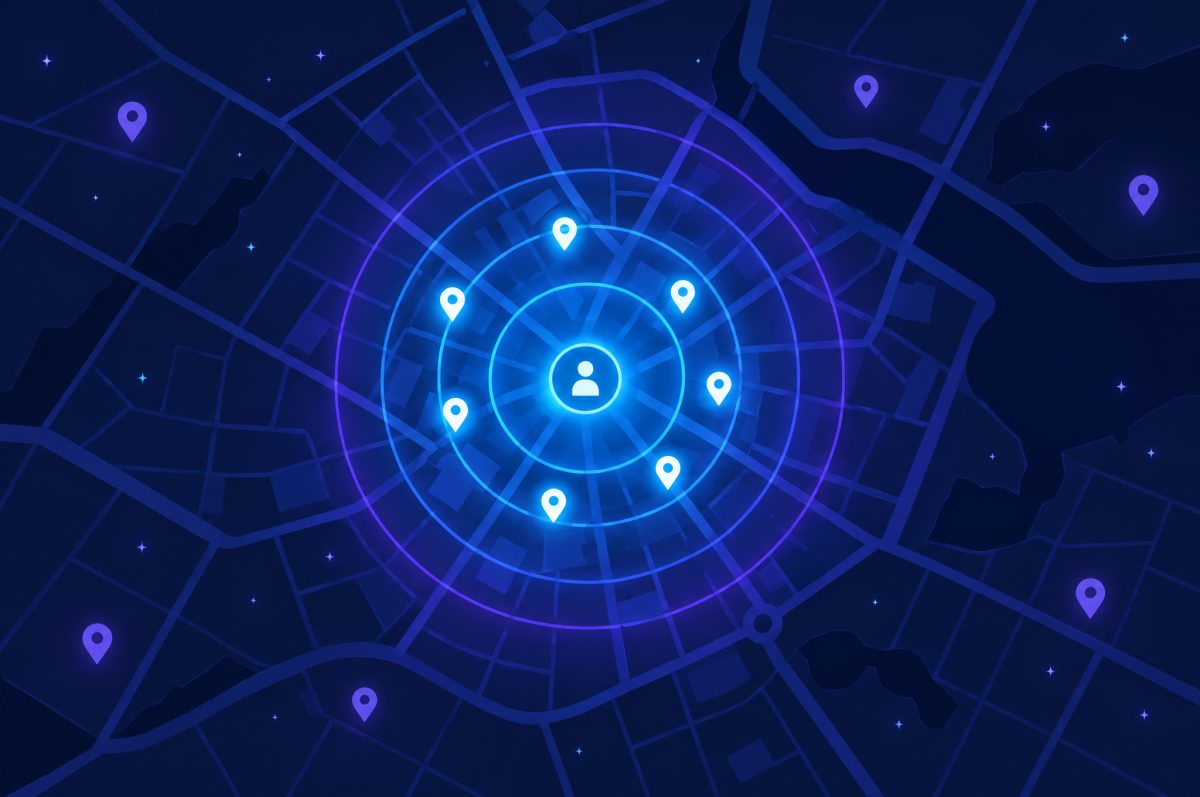
Here's where the conflict-theory story gets a twist. In local search, the results that show a map and a short list of nearby businesses, Google says rankings depend mainly on three things:
- Relevance: how well a business's profile matches what someone searched for
- Distance: how close the business is to the person searching
- Prominence: how well known the business is, including reviews, ratings and links from other websites
Google's guidance is blunt that there's no way to request or pay for a better local ranking. A national chain can outspend a family-owned shop on ads, but it can't move its store closer to your customers.
Relevance and prominence can't be bought directly either. They're earned through a complete Business Profile, a steady stream of honest reviews, a useful website, and a real reputation in the community. Those are exactly the things a well-run local business already has, or can build.
How local businesses can compete in 2026
- Treat your Google Business Profile like a storefront. Fill in every field: categories, hours, services, service area, photos and holiday hours. Keep it current. It's often the first thing a customer sees, and sometimes the only thing.
- Build reviews steadily and honestly. Reviews feed prominence, and customers read them closely. Our guide to online reviews for local businesses covers what customers trust and what's now against the rules.
- Answer the questions people actually ask. Write pages that clearly answer specific questions about your services, prices, process and area. Short, direct answers near the top of a page are what both search engines and AI summaries pull from.
- Make your website easy for machines to read. Real headings, descriptive links, alt text and clean structure help search engines and AI tools understand your pages. These are the same fundamentals that make a site accessible, covered in website accessibility and the ADA in 2026.
- Cite your sources and show your numbers. Academic research on "generative engine optimization" from Princeton and IIT Delhi found that adding citations, quotations and statistics could make a source noticeably more visible in AI-generated answers in their tests. Specific, sourced content is easier to trust and easier to quote.
- Earn local links and mentions. Sponsorships, local news coverage, chamber of commerce listings and partnerships with nearby businesses all build prominence the old-fashioned way.
- Use paid ads deliberately, not desperately. Ads still work, especially for high-intent local searches. But they rent attention. The steps above build attention you own.
The point of conflict theory isn't that the game is hopeless. It's that the rules aren't neutral, and knowing where they tilt shows you where to push. For local businesses, the tilt in their favor is being close, being known and being trusted.
That's the work our digital marketing and advertising team does every day for businesses across the Lehigh Valley, Bucks and Montgomery counties and New Jersey.

Frequently asked questions
Do Google's AI Overviews reduce clicks to websites?
Yes, according to Pew Research Center. In its 2025 study of real browsing data, users clicked a regular search result in 8% of visits when an AI summary appeared, compared with 15% when none appeared. They clicked a link inside the summary only about 1% of the time.
What is a zero-click search?
A search that ends without the user clicking through to any website, usually because the answer appears on the results page. SparkToro and Datos found that 58.5% of U.S. Google searches in 2024 ended without a click.
Is SEO dead in 2026?
No, but it has changed. Fewer searches lead to clicks, so being the source that search engines and AI summaries rely on matters more. Clear answers, sourced facts, good structure and a strong local presence are what hold up.
Can you pay Google for a better local ranking?
No. Google says local results are based mainly on relevance, distance and prominence, and that there's no way to request or pay for a better local ranking. Paid ads appear separately from those rankings.
How do I get my business cited in AI answers?
There's no guaranteed method, but the same things that build trust with search engines help: a complete Google Business Profile, steady honest reviews, clear pages that directly answer common questions, cited facts and statistics, and mentions from other reputable local sources.
More from this series
This article is part of a Deep Sky series on the sociology of the internet:
- The sociological imagination in a digital world: why trends happen and what businesses can learn.
- Why a 4.7 beats a 5.0: the sociology of online reviews.
- Website accessibility and the ADA in 2026: who has to comply, and by when.
- Who regulates your website? The FTC, the states and the rest of the rulebook for 2026.
- The digital divide in 2026: who's still left out, and why local websites must work for them.
- Designing websites for older adults: they're online, so build for them.
Sources
- Pew Research Center, Google users are less likely to click on links when an AI summary appears in the results (July 22, 2025)
- SparkToro, 2024 Zero-Click Search Study (July 2024)
- Google Business Profile Help, How to improve your local ranking on Google
- Aggarwal et al., GEO: Generative Engine Optimization (KDD 2024)
This article began as a college sociology paper by Nathaniel Kober in 2022 and was expanded and updated in October 2026.